
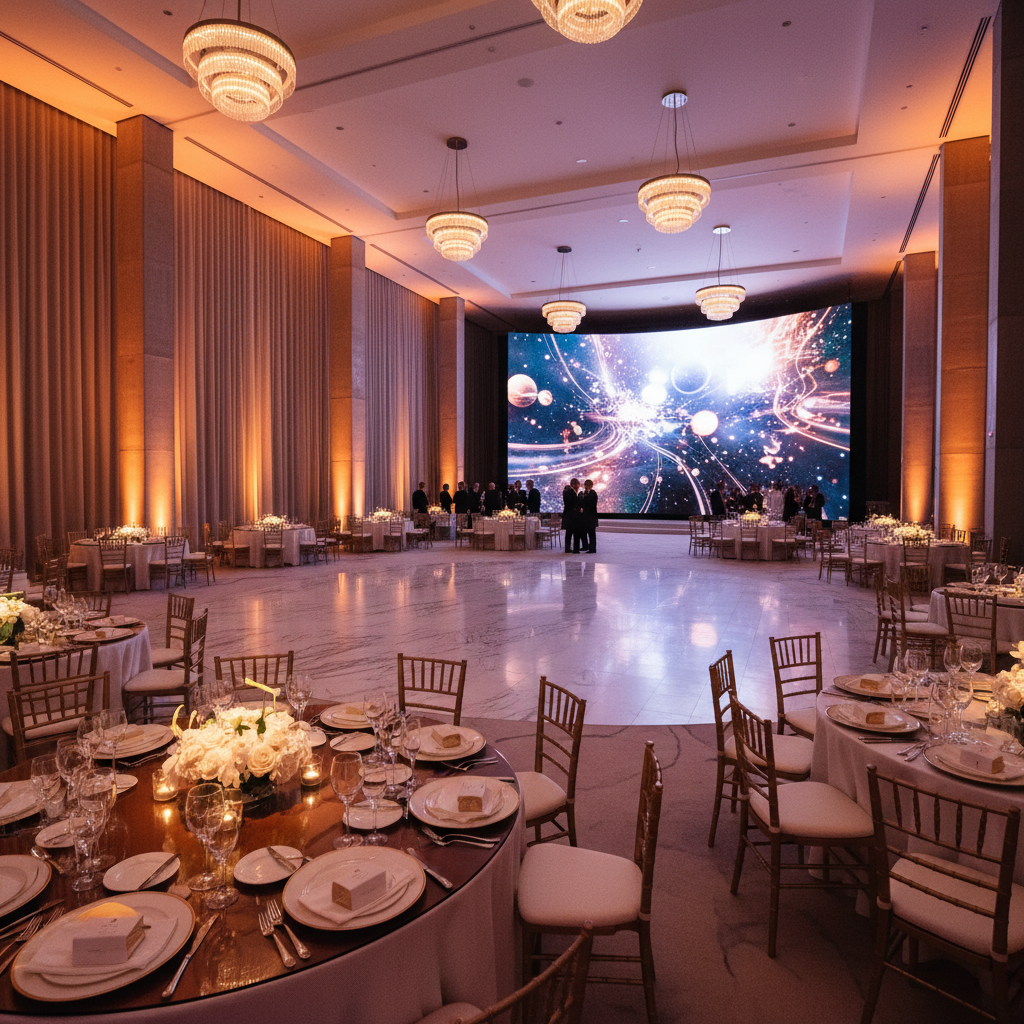
How to Choose a Technologically Advanced Wedding Venue
Planning a wedding today means blending timeless romance with modern convenience. If you’re searching for a technologically advanced wedding venue, you want a space that elevates your vision with lighting, sound, video, production, and service—without adding complexity. This complete guide shows you how to evaluate tech-forward venues like Viceroy Banquet Hall in Woodbridge, Ontario, so your celebration feels effortless and unforgettable.
Summary
- Define what a technologically advanced wedding venue really includes: lighting, audio, video, streaming, automation, and guest experience tech.
- Use our venue-readiness checklist, demo script, and questions to ask to quickly compare options.
- See 12 real-world examples of wedding tech that delight guests and simplify logistics.
- Get Woodbridge-specific tips to plan around travel, seasons, and operations.
- Leverage all-inclusive capabilities, like those at Viceroy Banquet Hall, to reduce vendor coordination and day-of risk.
Quick Answer
A technologically advanced wedding venue integrates pro-grade lighting, audio, video, and automation to deliver a seamless guest experience. In Woodbridge at Woodbridge, Viceroy Banquet Hall combines modern production with all-inclusive amenities, making it easier to plan and execute your event with confidence.
Local Tips
- Tip 1: For Friday evening weddings, plan vendor arrivals around Highway 7 and Weston Road traffic. Ask your venue about preferred load-in doors and staging areas to keep AV and decor on schedule.
- Tip 2: Winter dates near holiday rush can affect travel. Build in buffer time for vendors and consider valet or coordinated drop-offs to keep guests comfortable in cold weather.
- Tip 3: If your event includes cultural elements (e.g., a sangeet or mehndi night), request back-of-house holding space and power drops for live performers and DJs. Confirm your venue’s breaker map and dedicated circuits.
IMPORTANT: These tips reflect Woodbridge logistics and the needs of weddings that use professional lighting, audio, and staging support.
What Is a Technologically Advanced Wedding Venue?
Not all “modern” venues are built the same. A true technologically advanced wedding venue is designed, wired, and staffed for production-grade events—not just basic rentals with add-ons.
- Integrated lighting: DMX-programmable uplighting, intelligent moving heads, spotlighting, and scene presets.
- Professional audio: Balanced in-room coverage, wireless microphones, and experienced operators.
- Visual systems: LED video walls or high-lumen projection for content, monograms, and live feeds.
- Streaming-ready: Camera positions, switchers, and reliable bandwidth for virtual guests.
- Automation: Pre-programmed cues for entrances, speeches, and first dances to create cinematic moments.
- Operations backbone: Power distribution, rigging points, and a control booth managed by trained staff.
- All-inclusive support: Coordination with catering, floor plans, timelines, and vendor access—hallmarks of full-service venues like wedding reception services at Viceroy.
Here’s the thing: technology should disappear into the experience. When everything works, guests feel the magic—without noticing the complexity behind it.
Why a Tech-Forward Venue Matters
Your wedding has dozens of “moments that matter.” Tech shapes those moments and protects them from risk.
- Consistency: Pre-programmed lighting and rehearsed cues minimize surprises and deliver repeatable results.
- Clarity: Good audio is non-negotiable. Guests should hear vows and speeches from any seat.
- Immersion: LED walls, spotlights, and atmosphere effects turn a room into a story.
- Accessibility: Hybrid options let relatives join from anywhere via live stream.
- Efficiency: One team, one plan. All-inclusive venues reduce vendor overlap and friction.
- Scalability: From 70 to 800 guests, the system should scale without compromise—something Viceroy is built to handle.
Bottom line: a technologically advanced wedding venue safeguards your timeline and elevates the guest experience.
How Tech-Enabled Venues Work
Think of the venue like a theater built for weddings—equal parts ambiance and engineering.
- Design-first planning: Floor plans, sightlines, and rigging positions are mapped to key moments.
- Show control: Lighting consoles, audio mixers, and media servers run synchronized cues.
- Previsualization: Teams create scene presets you can preview during the walkthrough.
- Redundancy: Backup mics, spare cables, and contingency cues keep the show running.
- Operator expertise: Experienced technicians translate your timeline into a well-paced production.
Types of Wedding Venue Technology
Use this list to guide your tour and demo requests.
Lighting and Atmosphere
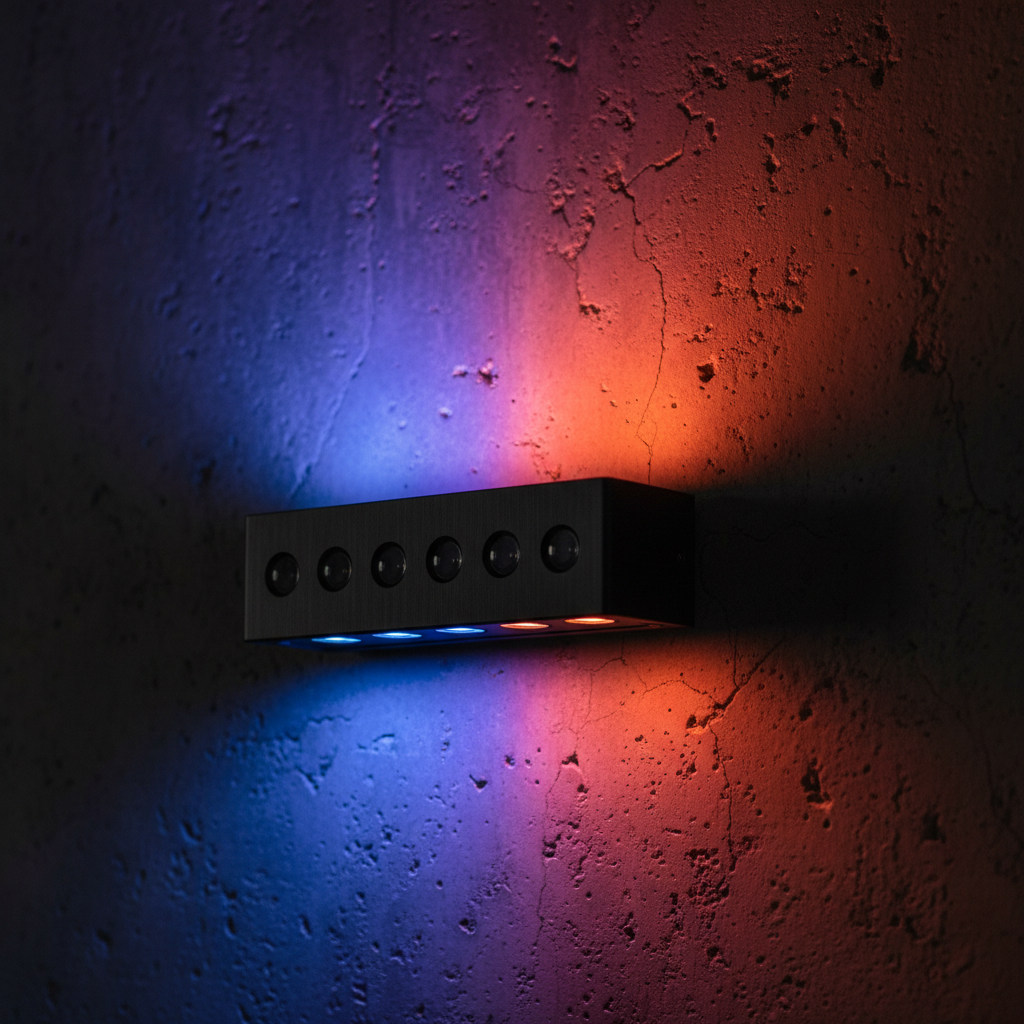
- DMX uplighting: Wall-wash colors tied to your palette and timeline.
- Spotlights and follow-spots: Pin your entrances, first dance, and cake cutting.
- Intelligent moving heads: Create dynamic patterns for grand entrances and open dance.
- Ceiling effects: Star fields or gobo projections to transform the room.
- Spark effects: Cold spark fountains for safe, dramatic moments (venue-approved).
Audio and Music
- Distributed speakers: Even coverage so music and speeches are clear for all guests.
- Wireless microphones: Handheld and lavalier options for officiants and toasts.
- DJ and band integration: Professional tie-ins, stage power, and monitoring support.
- Acoustic treatment: Reduce echo and feedback for intelligible speeches.
Video, Visuals, and Streaming
- LED video walls: Display slideshows, monograms, and live camera feeds.
- High-lumen projection: Alternate option where LED walls aren’t used.
- Multi-camera capture: Placement for aisle, stage, and crowd reactions.
- Live streaming: Reliable upload bandwidth and encoder for hybrid guests.
Automation and Control
- Show cues: Pre-programmed sequences for the ceremony, grand entrance, and first dance.
- Lighting presets: Daytime, dinner, dance, speeches—one-tap transitions.
- Power distribution: Dedicated circuits for entertainment, decor, and catering equipment.
Guest Experience
- Digital signage: Animated welcome boards, seating guides, and QR-enabled menus.
- Accessibility tech: Floor-level ramps, assisted listening, and camera sightlines.
- Photo activation: 360 booths or roaming photographers connected to venue power and Wi‑Fi.
Best Practices for Touring a Technologically Advanced Wedding Venue
Arrive with a plan, leave with certainty. Use these steps to get a confident “yes.”
Prepare Your Demo Script
- Ask the venue to run a grand entrance cue: room blackout, spotlight, and music swell.
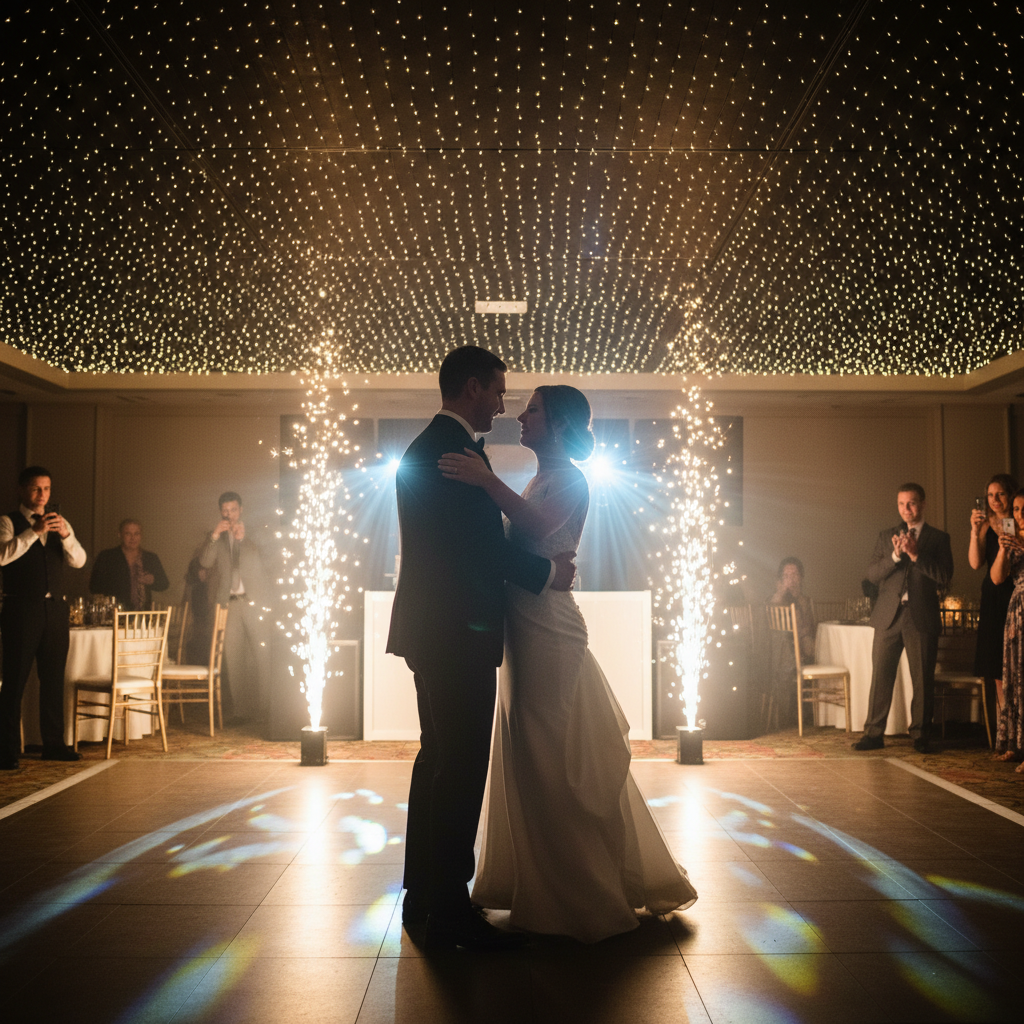
- Request a first dance look: spotlight + starry ceiling + cold sparks (if permitted).
- Test speech audio with a handheld mic from three different guest tables.
- Preview LED wall content: a short intro video, a slideshow, and a live camera feed.
- Walk a timeline rehearsal to review transitions from ceremony to cocktail to reception.
Verify the Operations Backbone
- Confirm power map and dedicated circuits for band/DJ and production.
- Check rigging points and ceiling height for decor and lighting.
- Ask about redundancy: spare mics, backup players, and contingency cues.
- Review floor plan options for your guest count (70–800+ seating scenarios).
- Meet the technical lead who will run your show on the day.
Evaluate the Team, Not Just the Room
- Ask for showcall experience—who calls cues, and how do they coordinate vendors?
- Discuss cultural program support (e.g., dhol players, live performers, ceremonial stages).
- Review load-in logistics and vendor windows for decor, florals, and entertainment.
- Confirm security and safety protocols for special effects and crowd flow.
Questions to Ask (Copy/Paste Ready)
- What production gear is permanently installed versus brought in by vendors?
- Can we preview lighting presets and hear audio coverage from different tables?
- Do you provide a dedicated showcaller or AV lead on the day?
- How do you handle rehearsals for entrances, speeches, and special dances?
- What backup plans are in place if a microphone or media source fails?
- Where can we stage performers and store cases during the event?
- How do you manage a same-room ceremony flip or fast cocktail-to-dinner transition?
Tools, Checklists, and Resources
Print this page or save the following lists for your venue tours.
Venue Tech Readiness Checklist
- DMX uplighting and intelligent fixtures with preset scenes
- Distributed audio with wireless mics and a staffed mixing console
- LED video wall or high-lumen projector and screen
- Live streaming capability and strong, dedicated internet
- Power distribution map and rigging points
- Rehearsal and cueing support from an onsite team
- Load-in schedule and vendor access details
- Accessibility accommodations and signage
Simple Process to Compare Venues
| Category | What to Look For | Questions to Ask |
|---|---|---|
| Lighting | DMX presets, dynamic effects, spotlight options | “Can you run the grand entrance cue?” |
| Audio | Even coverage, feedback control, wireless mics | “Can we test speech audio from three tables?” |
| Visuals | LED wall/projection, media playback, live camera | “Can you show a slideshow and a live feed?” |
| Streaming | Dedicated bandwidth, encoder, camera positions | “How do you support hybrid guests?” |
| Operations | Power map, rigging points, load-in logistics | “Where are the dedicated circuits and loading doors?” |
| Team | Onsite tech lead, showcaller, rehearsal time | “Who runs cues and how do we rehearse?” |
For a helpful overview of traditional ceremony elements (useful when blending culture with modern production), see this regional perspective on traditional wedding ceremonies.
Want an all-in-one experience? Explore Viceroy’s venues page and dedicated wedding reception services to see how integrated planning, production, and hospitality simplify your day.
Case Studies and Examples
These mini-scenarios illustrate how a technologically advanced wedding venue translates vision into reality.
12 Practical Examples
- Spotlit Aisle Entrance: The room dims, a single spotlight follows the processional, and the music swells. Guests feel the suspense, photographers get perfect frames.
- Live Ceremony Feed: A camera near the aisle sends a close-up of vows to the LED wall, so guests in the back catch every expression.
- Hybrid Welcome: A secure live stream with a branded intro lets overseas family watch the ceremony and post messages shown on screen during cocktails.
- Sangeet Stage Support: Elevated risers, dedicated power, and balanced audio keep dhol players and vocalists crisp without overpowering conversation.
- First Dance “Sky” Moment: Starry ceiling effect and two front spotlights make the couple glow, while cold spark fountains pop on the final chorus.
- Seamless Room Flip: After an in-room ceremony, preset scenes transition to dinner lighting in seconds, while staff reset decor behind the scenes.
- Grand Entrance Montage: A 45-second video plays on the LED wall as the doors open. Lights chase to the head table as the couple enters.
- Speech Clarity: The AV lead triggers a speech preset—spotlight on the podium, house lights up slightly, and music ducks automatically.
- Cultural Dance Showcase: Lighting frames the floor and gently lifts levels on the audience, making video capture cinematic.
- Monogram Moments: A tasteful animated monogram rests on the LED wall during dinner, replaced by a dance-floor ambience loop later.
- Late-Night Energy: Moving heads and color chases signal the dance party, with haze and beams (venue-approved) for concert-like energy.
- Exit Cue: As the couple departs, the wall displays a “thank you” animation (pre-loaded), the music lifts, and lights guide guests to the foyer.
If you’re planning corporate festivities or welcome parties alongside the wedding weekend, Viceroy’s corporate event planning and social event hosting capabilities keep everything under one roof.
FAQ
-
How do I verify that a venue’s lighting and audio are truly professional?
Ask for a live demo. Request a grand entrance cue (blackout + spotlights + music), a first dance look, and speech audio tests from multiple tables. Confirm there’s a staffed console, DMX-programmable fixtures, distributed speakers, and a technical lead on the day.
-
Can a tech-forward venue handle a same-room ceremony and reception?
Yes—if the venue uses presets and has a practiced flip. Look for programmable scenes that transition from ceremony to cocktail to dinner in seconds, plus a staff plan for moving decor while lighting shifts attention elsewhere.
-
What should I prepare for a hybrid or live-streamed ceremony?
Confirm internet bandwidth, camera placement, and an encoder or switching setup. Ask the venue to play a short branded intro, verify audio levels from the officiant’s mic, and plan a backup capture if streaming fails.
-
Do I still need outside vendors with an all-inclusive venue?
It depends on your vision. Many couples rely on the venue’s built-in lighting, audio, and screens. Specialized effects or live bands may bring additional gear. What matters is an experienced venue team that can integrate vendors smoothly.
-
When should I tour a venue to evaluate technology?
Tour at twilight or early evening when lighting demos look their best. Bring your playlist and a short video file to test playback. Ask for a quick rehearsal of your entrance and first dance during the visit.
Conclusion
- A technologically advanced wedding venue blends aesthetics with engineering—lighting, audio, visuals, streaming, and automation.
- Prioritize demos, operations backbones, and the people who will run your show.
- Use our comparison table and checklists to evaluate venues quickly and confidently.
- In Woodbridge, Ontario, Viceroy Banquet Hall pairs modern production with all-inclusive hospitality and spaces for 70 to 800 guests.
Key Takeaways
- Ask for cue-based demos and confirm a staffed control position.
- Ensure audio coverage at tables farthest from the stage.
- Preview visual content on the actual LED wall or projector.
- Verify power maps, load-in paths, and backup plans.
- Choose a partner, not just a place—experience matters.
Ready to see it live? Explore Viceroy’s wedding reception services and venues page, then schedule a walkthrough to experience the lighting, audio, and visual systems in action.
